 TM
TM
The walnut husk fly has become a significant mid- to late-season pest across all walnut-growing regions of California. Once considered a secondary concern, it is now an unpredictable threat that can cause serious economic losses if not properly managed.
Variety Susceptibility and Pest Life Cycle
Both black and English walnut varieties serve as hosts, with susceptibility varying by cultivar. Early-season damage is more common in varieties such as Payne, Serr and Hartley, while Chandler is typically affected later. This staggered vulnerability makes timing and monitoring critical.
Adult flies begin emerging in early summer and can continue through September, creating a prolonged risk window. Females lay eggs just beneath the husk surface, leaving visible sting marks. Once hatched, larvae feed on the husk, causing black, mushy tissue that leads to shell staining and reduced nut quality.
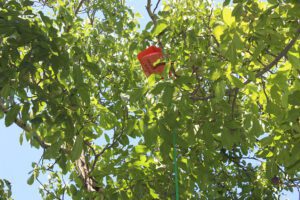
Damage Timing and Management Strategies
Early infestations, typically from late July through mid-August, pose the greatest threat. Feeding during this period can result in shriveled, darkened kernels, increased mold development and yield losses of up to 30%. Later infestations are less damaging to the kernel but can still reduce market value by staining shells and complicating hull removal.
Walnut husk fly has one generation per year and overwinters in the soil as pupae, making population carryover a key concern. Because adult emergence occurs over an extended period, control often requires multiple, well-timed insecticide applications.
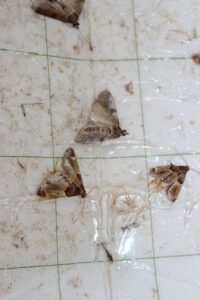
Monitoring is essential. Yellow sticky traps paired with ammonium carbonate lures are commonly used to detect adult activity and guide spray timing. Applications typically begin shortly after the first flies are captured and are directed at the developing husk.
Jhalendra Rijal, area IPM advisor for the northern San Joaquin Valley, said weather this year may have had limited influence on walnut husk fly compared to other pests. Because the insect overwinters in the soil, ambient weather conditions are less likely to directly affect its development in the same way they do for other species.
However, Rijal noted that walnut husk fly has become a growing concern in Central Valley orchards. Fifteen to 20 years ago, many growers were unfamiliar with the pest, but today it is widely recognized as a consistent issue across walnut operations.
As for what is driving the increase, Rijal said it is likely not due to chemical resistance but rather a broader rise in pest pressure. Factors may include the expansion of walnut acreage, shifts in pest management practices for other insects and potentially improved survival under warmer winter conditions. He added that the exact causes are still not fully understood, but these factors likely contribute to the trend.
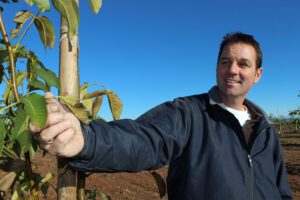
Walnut Husk Fly Research
Walnut husk flies overwinter as pupae in the soil, prompting Rijal and colleagues to investigate their underground biology.
“We initially surveyed the walnut husk fly pupa sample from the soil, and we determined that more than 80% to 85% of the pupa were found within the top four inches of the soil,” Rijal said.
One area of interest is the use of environmentally friendly soil-applied biological controls, particularly insect pathogens known as entomopathogens. These include organisms such as specialized nematodes and fungi that naturally infect and kill insects. Because they are living biological agents, they can be applied to the soil with minimal risk to non-target organisms, making them a promising option for integrated pest management programs.
Trials showed these biological controls were effective under laboratory conditions and later demonstrated measurable results in the field. When applied to orchard soil, plots treated with entomopathogenic fungi and nematodes showed population reductions of roughly 23% to 30% compared to untreated controls, with nematodes achieving the highest reduction, Rijal said.
While that level of control is lower than what is typically seen with traditional chemical insecticides, Rijal noted that these materials are better suited as part of a long-term management strategy. In orchards with high walnut husk fly pressure, a single season of applications may not provide noticeable results. However, repeated use over multiple seasons could help gradually suppress populations and serve as a viable component of an integrated pest management program.
Applications were timed to target two key stages in the pest’s life cycle. The first occurs in the fall, when larvae drop from the fruit to the ground and come into contact with soil-applied entomopathogens. A second application was made in the summer, when adults begin emerging from the soil, again targeting the pest at a vulnerable stage.
“If you keep the codling moth damage low, then you’re also likely reducing the navel orangeworm population buildup
because it’s less favorable for navel orangeworm to infest early in the season.”
— Jhalendra Rijal, area IPM adviser
“Our conclusion at this point is that entomopathogens can be a viable option,” Rijal said, but he emphasized that successful use of biologicals depends on proper application and environmental conditions.
Adequate soil moisture is critical both before and after application to prevent the organisms from drying out in hot conditions. Irrigation is necessary to help move nematodes into the soil profile, and soils should not be allowed to remain dry for extended periods, as this can reduce their effectiveness.
Proper handling is essential when using biological products. Unlike traditional chemical insecticides, they should be applied as soon as possible after purchase, as their effectiveness declines over time. Storage conditions are also critical. Exposure to high temperatures, such as in a hot warehouse, can significantly reduce their viability.
Rijal emphasized that success with biologicals depends on maintaining the right environmental conditions. Providing adequate soil moisture and humidity at the time of application helps ensure the organisms remain active and perform effectively.
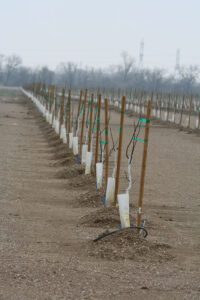
Codling Moth Activity
Rijal said he continues to monitor codling moth activity annually. Warmer-than-normal temperatures in late February and early March, combined with limited rainfall, have led to earlier insect activity this spring, including codling moth.
He noted that, historically, codling moth biofix has not occurred in the first two weeks of April. This year, however, activity was detected earlier in some orchards, with biofix set on March 17, the earliest he has observed in the last 10 years.
Increased spring temperatures have led to earlier activity across multiple pest species, including navel orangeworm and stink bugs. This year, females and eggs were detected in traps earlier than in previous seasons, indicating a broader shift in pest development.
He emphasized that pest control advisers and growers should adjust their expectations for timing, as insect activity and management windows may be advanced by one to two weeks. Monitoring and treatment decisions should be based on current conditions rather than calendar dates, as seasonal timing is likely to differ this year.
Based on trap data collected over the past several years, codling moth populations have remained consistently low and have not required treatment in the orchards Rijal monitors. Codling moth is still present, but activity levels have been minimal across multiple flight periods. While some orchards may experience higher pressure and require management, Rijal said that, in general, codling moth has not been a significant issue in recent years as long as populations are regularly monitored and remain below treatment thresholds or products are applied in a timely manner if warranted.
Codling Moth Decline
The decline in codling moth populations is difficult to attribute to a single factor, Rijal said. He suggested that improved monitoring and management may play a role, as codling moth is easier to track using traps and degree-day models, making its development and flight timing more predictable.
He noted that many growers likely apply at least one insecticide spray during key flight periods, which may also contribute to reduced pressure. Compared to walnut husk fly and navel orangeworm, Rijal described codling moth as more consistent and predictable in its emergence and behavior, making it easier to manage effectively.
Mating Disruption
“With the overall low to moderate pressure of the codling moth activity we’re seeing as an industry, I think it’s important to think about using mating disruption for codling moth,” Rijal said.
Mating disruption is a highly effective tool for managing codling moth, but adoption in walnut orchards remains low compared to its widespread use in apples in other regions. Rijal noted that, despite its proven efficacy, many walnut growers have been slow to adopt the practice.
With codling moth populations currently at relatively low levels, Rijal suggested this may be an ideal time for growers to consider integrating mating disruption as a long-term management strategy. Although the cost is slightly higher than traditional insecticide programs, it is not prohibitive and can provide more sustained, long-term control. Also, one application at the beginning of the first flight should cover multiple flights when aerosol or plastic dispensers are used.
Maintaining low codling moth populations can also help reduce navel orangeworm pressure. Because navel orangeworm typically cannot infest nuts until husk split occurs later in the season, earlier infestations often depend on damage caused by codling moth. When codling moth creates entry points, it allows navel orangeworm to infest nuts sooner.
From an economic standpoint, codling moth damage often creates an opportunity for navel orangeworm to infest the same nuts. When this occurs early in the season, it can lead to higher navel orangeworm populations later, increasing the risk of significant damage as the population builds over time.
From that perspective, the higher cost of mating disruption for codling moth could pay for itself by helping control both pests. By reducing codling moth damage, growers can also limit navel orangeworm infestations.
“If you keep the codling moth damage low, then you’re also likely reducing the navel orangeworm population buildup because it’s less favorable for navel orangeworm to infest early in the season,” Rijal said.
Matt Anchordoguy, a walnut grower in Northern California, is using pheromone disruptors.
Anchordoguy said orchard sanitation also plays a key role in managing codling moth. He noted that in a particularly wet winter, his operation was unable to clean up walnuts on the orchard floor, which led to increased codling moth populations the following season.
“We’re finding codling moth, but nothing affected my grade sheets on delivery,” Anchordoguy said.
Anchordoguy is reducing pesticide use in his walnut operation as part of a more regenerative approach. While still farming conventionally, he takes a more conservative approach to chemical applications, only using fungicides and insecticides when pest or disease levels reach treatment thresholds rather than applying them routinely.
He also plants cover crops and
has beneficial insects in his orchards and said his trees have never looked so healthy.
Publisher’s Take
The Big Picture: What to do Next
- Time Walnut Husk Fly Sprays Carefully
Peak damage occurs late July through mid-August, making early detection and timely
applications critical. - Use Traps to Guide Decisions
Yellow sticky traps with lures help determine when to spray. Rely on field data, not calendar dates. - Biological Controls Require Consistency
Entomopathogens can reduce populations over time but require proper moisture, handling and repeated use. - Expect Earlier Pest Activity
Warmer conditions are advancing pest development, shifting management windows earlier in the season. - Consider Mating Disruption
Mating disruption can help manage codling moth and reduce navel orangeworm pressure over the long term.